
Key Points
- Farmers across Africa are faced with eroded, phosphorus-limited soils, leading to low crop yields, despite having some of the world’s richest phosphate deposits in Morocco.
- Soil scientists at Mohammed VI Polytechnic University in Morocco are building a countrywide network of farmers and soil experts to routinely test soil for its nutrients and other properties, giving farmers more tailored fertilizer recommendations.
- Morocco is the first country in Africa to create soil fertility maps, a way to map out the productivity of arable land, with the practice now catching on in other countries.
- Researchers and others in the agriculture sector see Morocco as a potential leader in boosting soil productivity and revolutionizing agriculture in Africa to expand production beyond subsistence farming.
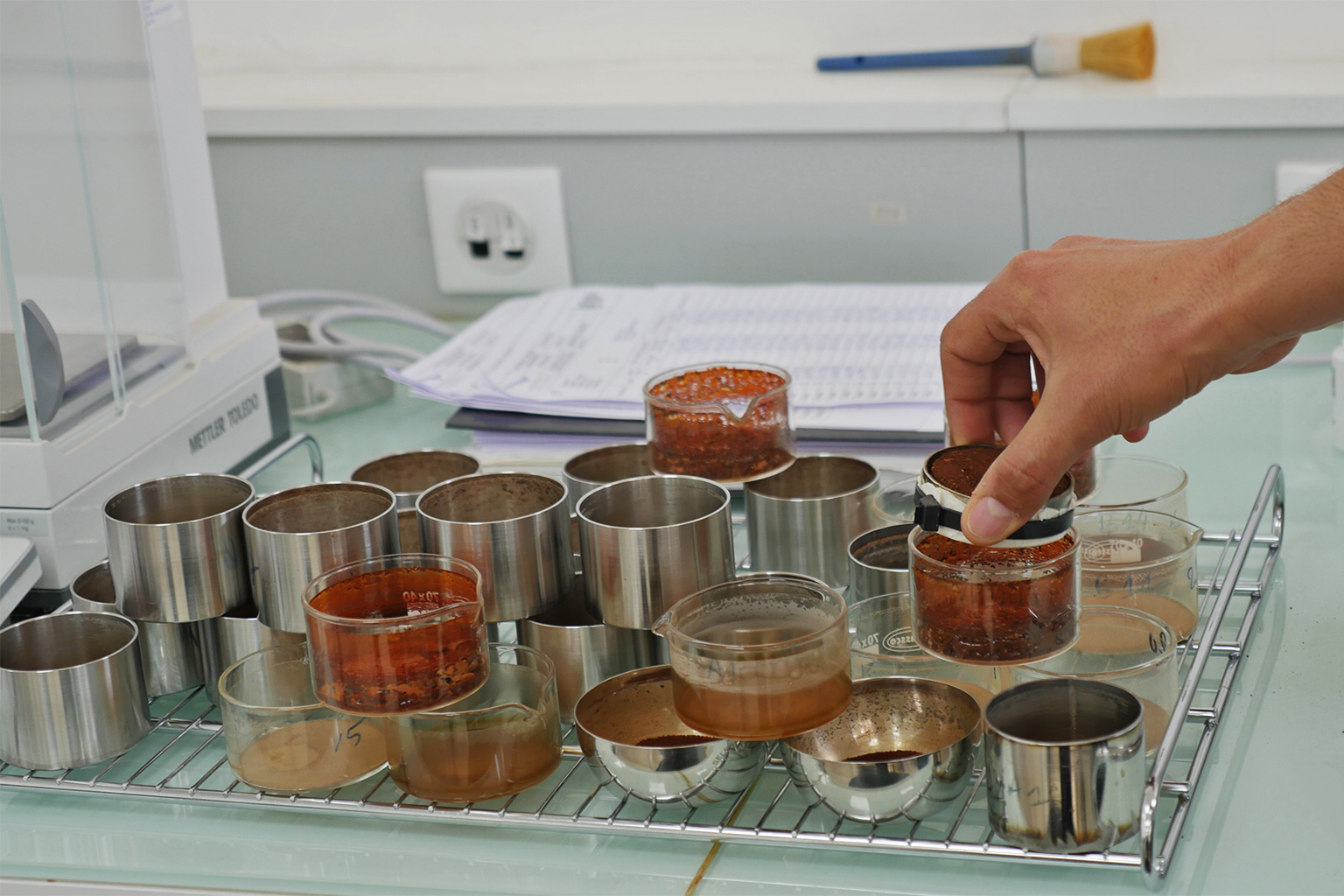
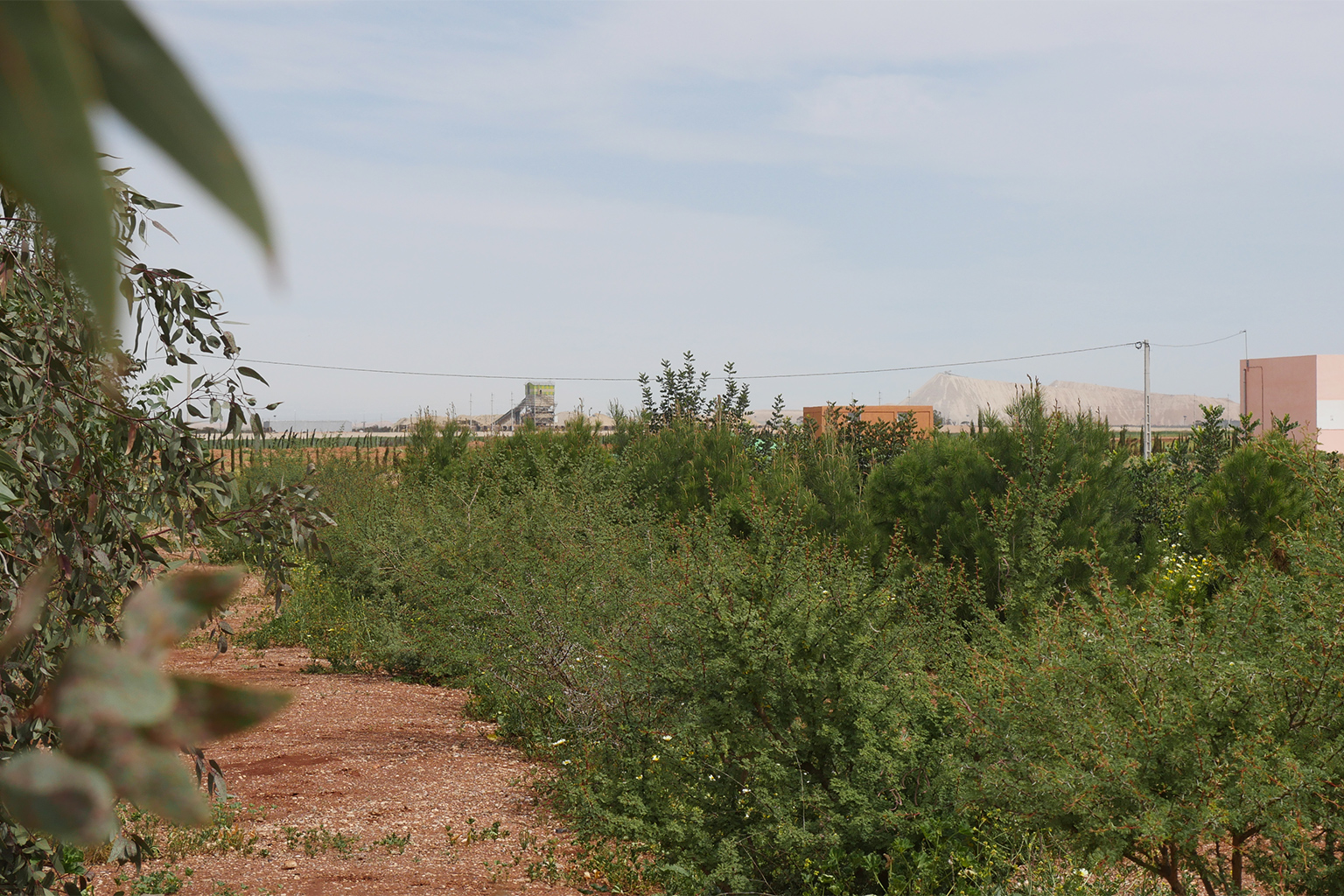
BEN GUERIR, Morocco — Moussa Bouray sifts through hundreds of soil samples on the shelves of his lab that that will undergo analysis for nutrients: nitrogen, potassium, and especially phosphorus. Outside the lab at Mohammed VI Polytechnic University, mounds of phosphate sediment from a nearby mine rise so high they resemble mountains in the distance. These piles are loaded with phosphorus, a key ingredient in fertilizers. But some of Bouray’s soil samples, which come from farms across Morocco, will still be phosphorous-deficient.
Bouray’s work is part of a larger effort to improve soil fertility, not only in Morocco but across Africa. Mohammed VI Polytechnic University, known locally as UM6P, has plans for more agriculture labs, dubbed experimental farms, beyond Morocco; Côte d’Ivoire, Senegal, Ghana, Ethiopia and seven other countries are on the list. Together, the labs will form a network called the Agricultural Innovation and Technology Transfer Center. It’s an initiative funded by UM6P and Morocco’s multibillion-dollar phosphate company, OCP Group, which founded the university in 2013.
Bouray and the other scientists at this lab are like doctors for farmers’ soils. They analyze the samples to create diagnoses — such as a phosphorus deficiency or acidity — to recommend fertilizer applications or specific farming practices.
In the past, Moroccans followed standard fertilizer recommendations to add nitrogen, phosphorus and potassium to their soil regardless of location, climate, crop or other factors, says Rachid Serraj, director of strategy and Africa initiative at UM6P. “Now, we realize that it doesn’t really work. It’s like if you’re treating everybody with aspirin.”
Instead, their teams are turning toward precision agriculture by tailoring farming practices to each farm. “You cannot just have blanket recommendations,” Serraj tells Mongabay. “We want to design the fertilizer to the specific needs of those crops.”

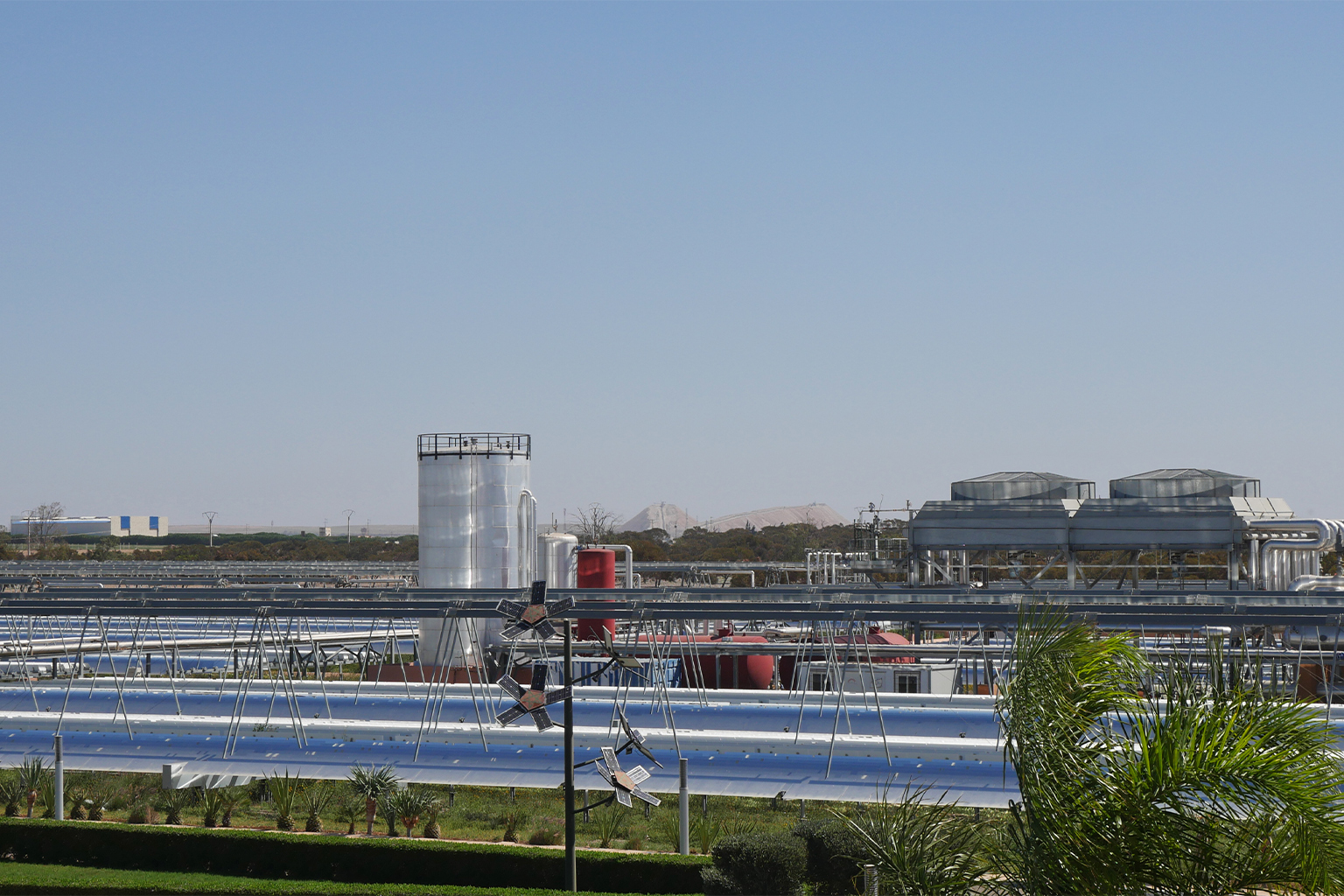
The stakes are high: 21% of Africans still face severe hunger, according to the Food and Agriculture Organization’s 2022 report on food security. Most African farmers grow crops to feed themselves and their families, not to sell their products to a global market.
“It is life or death,” says Fassil Kebede, an Ethiopian soil scientist at UM6P. “Land is our resource.”
Data suggest Africa as a whole is producing just 20% of the yield it could be producing with better farming practices and technology, like fertilizers and irrigation systems. In some countries, the gap between actual and potential yield for staple crops like cereals and legumes is as high as 90%, according to the Global Yield Gap Atlas.
Solutions have to start with a deep understanding of local and regional soil types, says Ingrid Epezagne, the director of Francophone countries for the African Agribusiness Incubators Network, an organization supporting farming startups across the continent.
You can’t pretend to support farmers, she adds, “without understanding all of the parameters involved and understanding the soil we are dealing with, especially in this climate change era. It is crucial.”

The phosphorus problem
Located an hour north of Marrakech by train, Ben Guerir is a poor town. But it’s rich in one thing: phosphate. Morocco sits on more than 70% of the world’s remaining phosphate rock, and Ben Guerir hosts one of OCP’s major mining sites in the country. (Morocco’s phosphate deposit is now challenged by a recent discovery in Norway that may be even bigger.)
Phosphorus is a critical nutrient for plant growth and has been used in chemical fertilizers since the mid-1800s, fueling the global hunt for phosphate rock deposits in places like modern-day Morocco. Today, the world uses an average of 31 kilograms of phosphorus fertilizer per hectare of cropland, or about 28 pounds per acre — nearly four times more than was used in 1961, according to Our World in Data. And since 2010, we’ve produced more than 44 million metric tons of phosphorus fertilizer globally each year.
However, most of Africa’s soils are phosphorus-limited, meaning there are other elements that control how much phosphorus is available to plants, Kebede says. Lots of the continent’s soils are acidic, making the phosphorus unavailable for plants. This presents a “very dangerous problem,” Kebede says, because acidic soils are less productive for growing crops and can increase toxicity.
He adds acidity is especially a problem in equatorial Africa, spanning the tropical forest region. High amounts of rainfall flush out important elements such as calcium and magnesium, which help retain phosphorus.

“When we look at the world, we have either the land of plenty or the land of excess,” says Bruno Gerard, dean of the College of Sustainable Agriculture and Environmental Sciences at UM6P. “Then you have the land of scarcity, and Africa is really a place where phosphorus is much needed.”
Africa’s phosphorus-deficient soil is a paradox: Although Morocco is the world’s second-largest phosphorus producer, after China, the majority of Africa is starved of this critical nutrient.
Meanwhile, the Global North faces the problem of an abundance of phosphorous. In the U.S., decades of copious fertilizer use — some of it imported from Morocco — have caused a phosphorus surplus in the soil. Rain then washes the phosphorus into groundwater and waterways, feeding oceans and lakes with too much nutrients and causing toxic algal blooms.
It’s a global imbalance dating back to the post-World War II era, when the Green Revolution swept from Mexico and across Asia to increase crop yields and quell famine. This began the widespread use of modern agricultural practices like irrigation systems, pesticides and chemical fertilizers, including phosphorus.
But Africa still struggles to feed itself despite having lots of available land for cultivation, says Serraj, who has also worked as a crop scientist for a variety of international organizations.

“The Green Revolution didn’t happen in Africa,” Serraj says. “The bottom line is soils are very poor in Africa, so you need to bring in the fertilizer.”
But fertilizer is expensive, especially for smallholder farmers. Recent crises like the COVID-19 pandemic and war in Ukraine have further driven costs up, especially as phosphorus exports from China and Russia, both major producers, have dried up. In sub-Saharan Africa, farmers only use about 10 kg of fertilizer per hectare on average, says Kebede, compared to more than 120 kg per hectare on U.S. farms. (That works out to 9 lbs/acre versus 107 lbs/acre.)
A final problem: phosphorus is finite.
“It’s not something that you can fix from the atmosphere or create,” Gerard says, unlike ammonia, for example, which can be created renewably. In the past decade, reports have warned of peak phosphorus: the day when our underground phosphorus deposits run out. But Morocco’s deposits currently soar above those of any other country, harboring 18 times the amount of the next largest deposit, in Egypt. Currently, Morocco, China, the U.S. and Russia are the world’s top producers of phosphate for export.
Yet, most of Morocco’s phosphorus gets shipped to wealthy nations in the Global North, where it’s liberally — some might say wastefully — applied to soils.
“We have to use it wisely,” Gerard says. The day phosphorus becomes abundant in Africa, he adds, “we will have won the war against food insecurity.”
Mapping out soils
To boost yields across Africa, scientists first need to understand how soil needs and conditions vary from place to place. That’s why UM6P, OCP and other institutions are building digital soil maps in several African countries, allowing for more tailored fertilizer and land use. For example, some soils may be better suited for forestry or livestock than growing crops, says Kebede, who researches soil productivity. His department maps soils and climatic conditions in Morocco and other countries, including Ethiopia, Senegal, Zambia, Mozambique, Kenya and Tanzania.
One initiative, called Fertimap, is a partnership between the Moroccan Ministry of Agriculture and OCP to create detailed soil fertility maps of the country’s 8.7 million hectares (21 million acres) of arable land. Its mapping initiatives also extend to other countries in West and East Africa. Fertimap is one of several efforts to document soil deficiencies on a wider scale, giving scientists the information they need to design specific fertilizer formulas for local crops.
Morocco was the first country in Africa to create these types of maps. But to build more of them, scientists need to analyze thousands of soil samples.
To get the soil, a UM6P program called Al Moutmir deploys nearly 90 agronomists, or crop scientists, across Morocco to gather samples from farmers, says Mohamed El Gharous, the director of the experimental farm initiative. Al Moutmir’s specialists help instruct farmers on how to take a clean soil sample proportionate to the size of the farm. Then they deliver the samples to the experimental farm.
At the lab, researchers like Bouray run chemistry tests to evaluate properties such as pH level and nutrient content. Once the analysis is done, Al Moutmir gives the farmer targeted advice on how to improve their soil based on the results: maybe a certain type of fertilizer, a different tilling practice, new irrigation patterns or crop rotations. Al Moutmir has also developed mobile apps for on-demand farming advice.
Soil types vary widely even within Morocco, Bouray says. In the Rehamna region, where Ben Guerir is located, water availability is a major constraint on local farmers who cultivate olives, barley or wheat. In other regions, high-salinity soils can threaten fruit production.
Soil fertility data can change every three to five years, Kebede adds. But as soil testing becomes more common, he envisions a future where soils are documented across the continent.


Revolutionizing agriculture
Part of the reason for the global phosphorus gap, Gerard says, is a reluctance by wealthy nations to invest in Africa and its agriculture.
So far, OCP has tried to make up for this gap in part by using its own resources. The state-owned company recently announced a $12 billion “green investment program” that prioritizes renewable energy for all of its phosphate mining facilities and processes by 2027. Until recently, OCP consumed 7% of Morocco’s annual energy output and 1% of its water, according to The Africa Report. OCP is now attempting to reduce its consumption by using renewable energy systems and desalination plants.
But the euphemistically named investment program will not make phosphate mining itself more environmentally friendly. The mining process involves displacing massive swaths of sediment and dumping it on land or near water, which can release toxins like trace metals into the environment. (Several years ago, OCP came under fire for contaminating shellfish with cadmium near its dumping sites in the Atlantic Ocean.) Multiple OCP officials did not respond to Mongabay’s requests for comment or interviews in reporting this story.
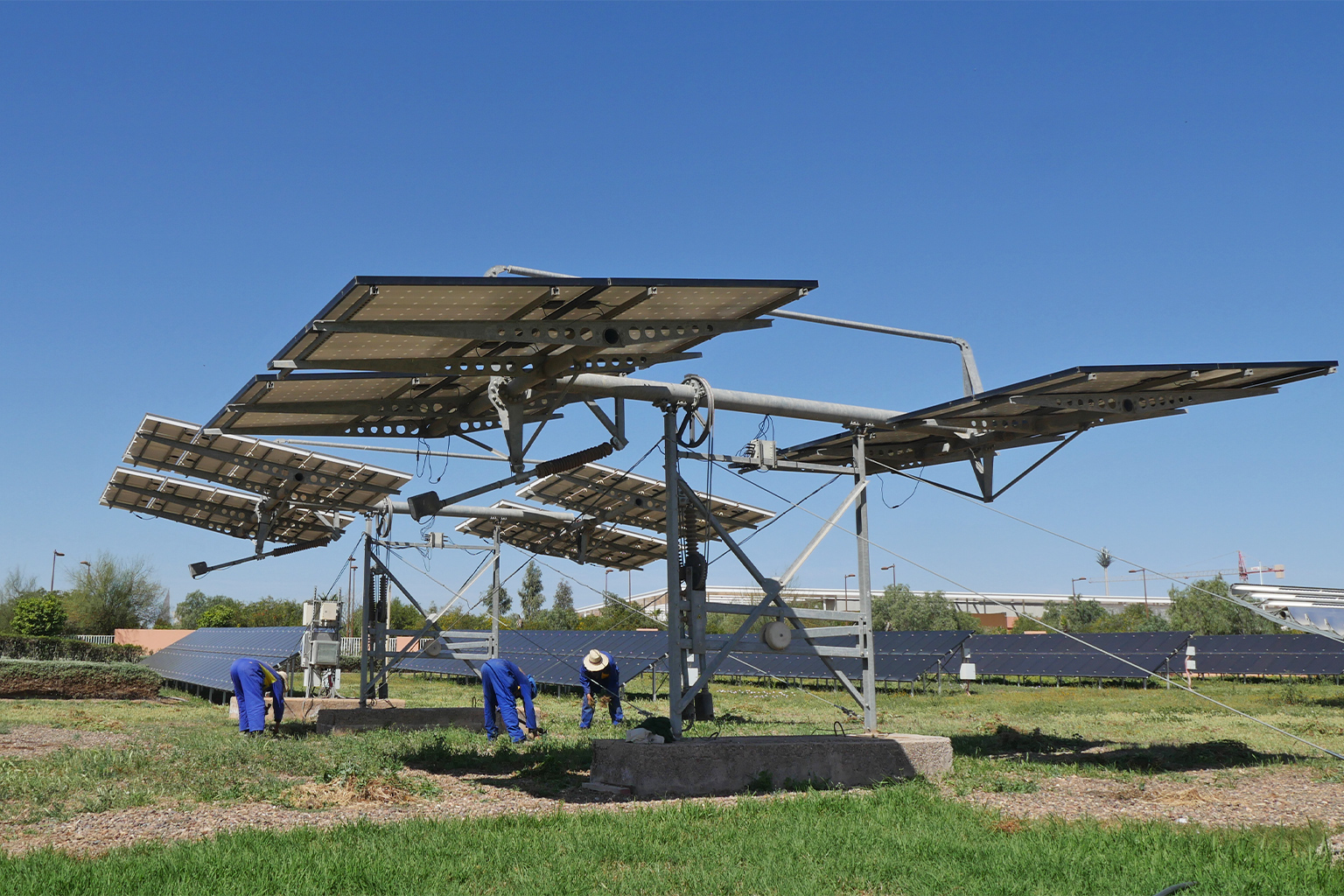
The International Finance Corporation, the World Bank’s investing arm, has also started to put money into Africa’s agriculture sector. In 2021, it granted a $100 million loan to OCP Africa, a subsidiary of the Moroccan company, to make fertilizers more widely available in seven African nations. And following the Russian invasion of Ukraine, OCP donated customized fertilizers to help smallholder farmers across the continent deal with a price surge, CEO Mostafa Terrab told Harvard Business School in a published interview.
Outside investment isn’t the full answer to improving African livelihoods, though, says agribusiness director Epezagne. “I feel like we’ve always been in that position, that dependency,” she says. “It does not help us.”
She adds there isn’t enough of an agribusiness scene in Africa yet for foreign investments to be attractive.
“How do we convince somebody from outside to come and invest in something which does not exist?” she says. “To me, it has to start from us.”
The bigger challenge, Epezagne says, is shifting away from a subsistence mindset and toward an agribusiness-focused one among young people. Farming isn’t seen as a noble profession in many countries, she says, where farms larger than 4 hectares (10 acres) are rare. Larger farms are either government-owned or run by multinational corporations, she says.
In September, UM6P plans to launch a new master’s program in agribusiness. It will be key to improving agriculture in countries with a younger population, Gerard says, but he adds that “agriculture alone will not save Africa.”
“We need to have a transformative vision of African agriculture that is not only looking at technologies,” Gerard says, emphasizing the systemic challenges to scaling up agriculture across Africa. While improving fertilizers will help, he says, it’s also necessary to attract investments and cater to an increasingly urbanized society. “The subsistence model is disappearing,” he says.
For now, projects like the experimental farms signal a collaborative step in the right direction, says Epezagne, who recently visited the lab in Ben Guerir.
“It has to come from somebody, and also having several initiatives across the continent is not a bad thing,” she tells Mongabay. If UM6P can eventually serve as an example for other research institutions, it could help smallholder African farmers shift away from subsistence models, she adds.
“We could have a different country in Africa replicating the same thing. They have in mind that ‘We are doing it for Africa,’” Epezagne says. “That’s something to encourage, and it’s a very good vision.”
This article was developed with support by New York University’s GlobalBeat program at the Arthur L. Carter Journalism Institute.
Reporting by Mongabay, republished with permission.

