Investing in Innovation
University of Ilorin builds science park as Nigeria targets $1 trillion economy
The University of Ilorin is developing a 200-hectare Science, Technology and Innovation Park on its campus in Kwara State, inside an area it designates as a free trade zone, and is asking companies to set up factories and research operations there. Partners gain access to the university's research base, including 52 patents, and to a campus of more than 70,000 students.
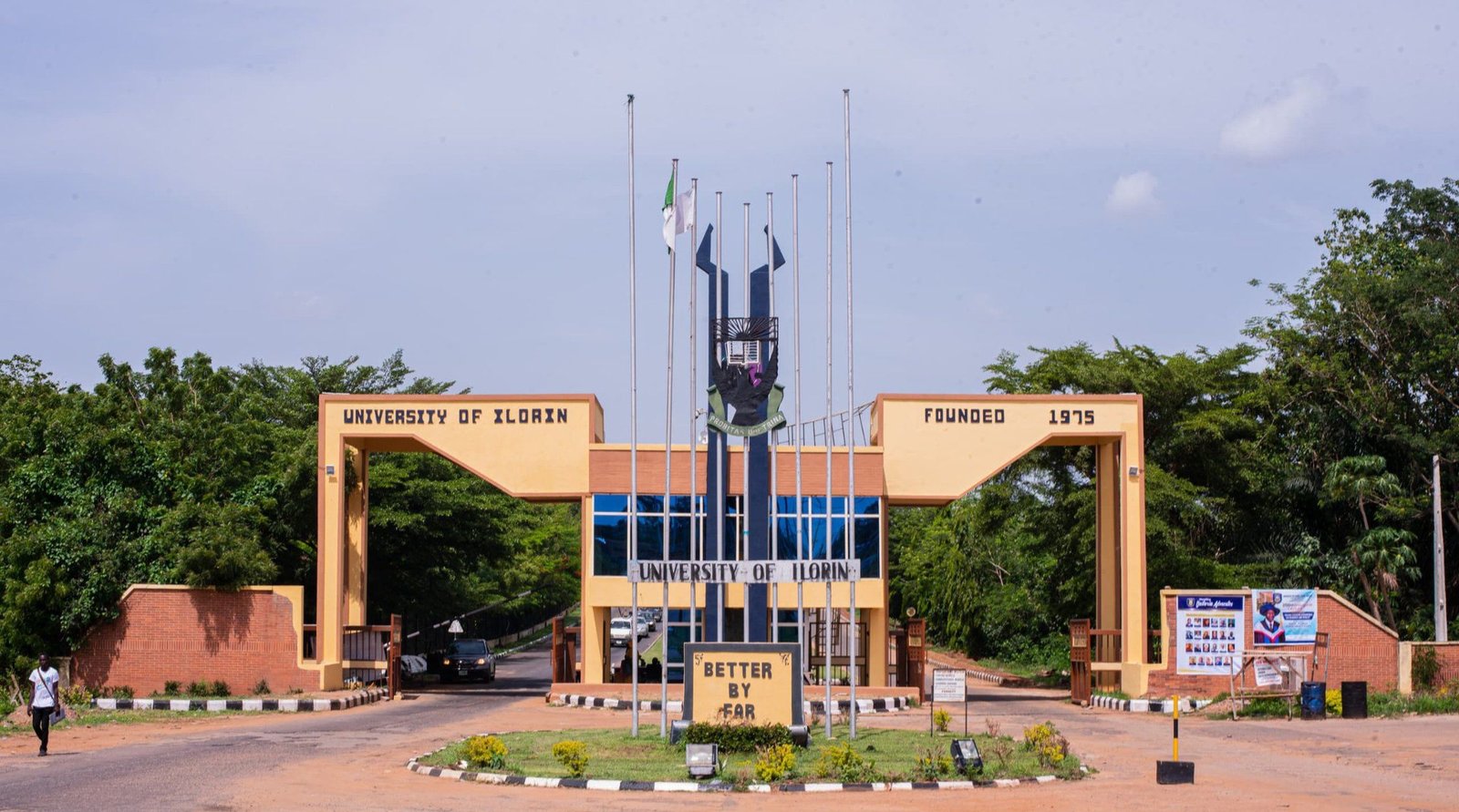
The main gate of the University of Ilorin, Kwara State, Nigeria. Credit: University of Ilorin.
Key Points
- The University of Ilorin has set aside 200 hectares of its campus for a Science, Technology and Innovation Park targeting manufacturing, agriculture, and ICT, and roads, water, and electricity are being installed. Vice-Chancellor Prof Wahab Egbewole said companies inside the university's free trade zone would receive tax and tariff exemptions, with Unilorin Holdings Limited signing the contracts.
- The university holds about 52 patents and wants them commercialised on campus in partnership with industry. Its research base includes a New England Journal of Medicine stroke trial led from Ilorin and a planned CRISPR malaria laboratory.
- Egbewole wants companies to bring their own factories, products, and projects to the site, and other universities to work with Ilorin's research centres. Partners are signed through a five-step process ending in a memorandum of understanding and a joint work plan.
- President Bola Tinubu's roadmap to a $1 trillion economy by 2030 names industrial parks and export processing zones, and Egbewole places the park inside that ambition. Ilorin's internally generated revenue has risen from about 4 billion naira ($3 million) to more than 15 billion naira ($11.4 million) a year in three years.
University of Ilorin builds a 200-hectare science park
The University of Ilorin is building a Science, Technology and Innovation Park on 200 hectares of its own campus in Kwara State, Nigeria, as an estate where companies set up factories and research operations alongside the university. Prof Daniel Kitaw of the Addis Ababa Institute of Technology, a visiting scholar at Ilorin, presented the plan to the university's principal officers, deans, and directors on 22 April 2025. He named manufacturing, agriculture, and information and communications technology as the park's target sectors, and described a mix of techno-parks, incubators, startups, and spin-off companies on the site, funded through government money, private investment, international grants, and public-private partnerships.
The park sits inside an area the university designates as a free trade zone. Companies that build factories there would have their tax liabilities covered and be exempt from some tariffs and charges, Vice-Chancellor Prof Wahab Egbewole said. Roads, water, and electricity are being installed across the site. "We have a legal framework already in place to drive this," Egbewole said, and Unilorin Holdings Limited, the university's business arm, holds the authority to sign contracts with tenants.
Breakthrough research at the University of Ilorin
A single pill combining three low-dose blood-pressure drugs lowers the rate of repeat stroke by 39% in patients who have suffered bleeding in the brain, the TRIDENT trial found in results published in the New England Journal of Medicine in April 2026. Prof Kolawole Wasiu Wahab, Dean of the Faculty of Clinical Sciences at Ilorin, led the trial in Nigeria as national principal investigator, within an international study run by Craig Anderson at The George Institute for Global Health. Wahab called the result a major win for secondary prevention of that type of stroke.
Gene editing against malaria is the university's newest programme. Diaspora Solution Group Nigeria signed a memorandum of understanding with Ilorin in August 2026 that makes the university the pilot site for research into CRISPR-Cas9 editing of Anopheles mosquitoes to suppress their reproduction. Prof Faoziat Adenike Sulaiman leads the university's scientific team, and a Malaria Control Laboratory is planned in the Department of Biochemistry, subject to biosafety approvals.
Ilorin holds about 52 patents, Egbewole said, and wants them commercialised "within our university" through partnerships with the companies that come to the park. In 2021 the National Office for Technology Acquisition and Promotion identified Ilorin as the Nigerian university with the most patent certificates. The campus adds a workforce and a market: 15,000 acres, more than 70,000 undergraduate and postgraduate students, and about 5,000 staff, Egbewole said.
Egbewole aligns the park with Nigeria's $1 trillion target
On 1 September 2026, President Bola Tinubu set out a roadmap for Nigeria to reach a $1 trillion economy by 2030, with industrial parks, export processing zones, and manufacturing centres among its components. Egbewole places the university's park inside that ambition. "We are also getting into the $1 trillion economy that the Nigerian government is trying to put on the table," he said.
Federal research funding runs through the Tertiary Education Trust Fund's National Research Fund, whose 2026 competition round is worth about 10 billion naira ($7.6 million) across all Nigerian institutions, Egbewole said. Ilorin won eight awards in the 2026 cycle, from ten researchers who reached the interview stage, and placed fourth among Nigerian universities, said Prof Abdulkarim Oloyede, Director of the Centre for Research Development and In-House Training. The university's target is 21 funded projects, up from three in 2022.
The university adds its own money. Its Senate Research Grant pays out 200 million naira ($151,000) a year, with a further 50 million naira ($38,000) in annual special intervention funding, and the university counted about 12 billion naira ($9.1 million) in research grants from outside Nigeria over the past two years, Egbewole said. Internally generated revenue has risen from about 4 billion naira ($3 million) a year to more than 15 billion naira ($11.4 million) in three years.

Prof Wahab Egbewole, Vice-Chancellor of the University of Ilorin. Credit: University of Ilorin.
Ilorin sets out what it wants from partners
The university's first ask is for companies to bring their own factories, products, and projects onto the site. Its second is for other universities to work with Ilorin's research centres. One industrial relationship already exists: a major oil company, which Egbewole did not name, funds engineering research on the oil and gas sector at the university and endows a professorial chair.
Egbewole set out the university's process for signing a new partner in five steps: identify a shared interest, meet in person, agree the areas of collaboration, sign a memorandum of understanding, then draw up a work plan between the university's units and the partner. "Partnership is equity, partnership is equality, and partnership is collaboration," he said. "We are looking for partners that will see us as equals, that will see us as collaborators."
A partner would need to bring a company, product line, or research programme willing to commit to the site, and a shared interest specific enough to carry it through the five steps to a signed memorandum and a work plan. In return the university offers serviced land inside its zone, its patents, its laboratories, and its student body. "This is the best time to come to University of Ilorin," Egbewole said.
Sources
- Innovation Report interview with Prof Wahab Olasupo Egbewole, SAN, Vice-Chancellor, University of Ilorin, 1 September 2026.
- Unilorin unveils plan for Science and Tech Park, University of Ilorin, 28 April 2025.
- UNILORIN don's team makes breakthrough in stroke treatment, University of Ilorin, 27 April 2026.
- DSGN advances malaria research with University of Ilorin partnership, Vanguard, 19 August 2026.
- Eight UNILORIN scholars win NRF research awards, University of Ilorin, 22 June 2026.
- Member University in Focus: University of Ilorin, Association of African Universities, 17 March 2026.
- Tinubu unveils roadmap to $1trn economy by 2030, Businessday, 1 September 2026.
- Unilorin Holdings Limited.
Institutions in this article: University of Ilorin, Unilorin Holdings Limited, Tertiary Education Trust Fund, The George Institute for Global Health, Diaspora Solution Group Nigeria, Addis Ababa Institute of Technology.


